












Horse Chestnut
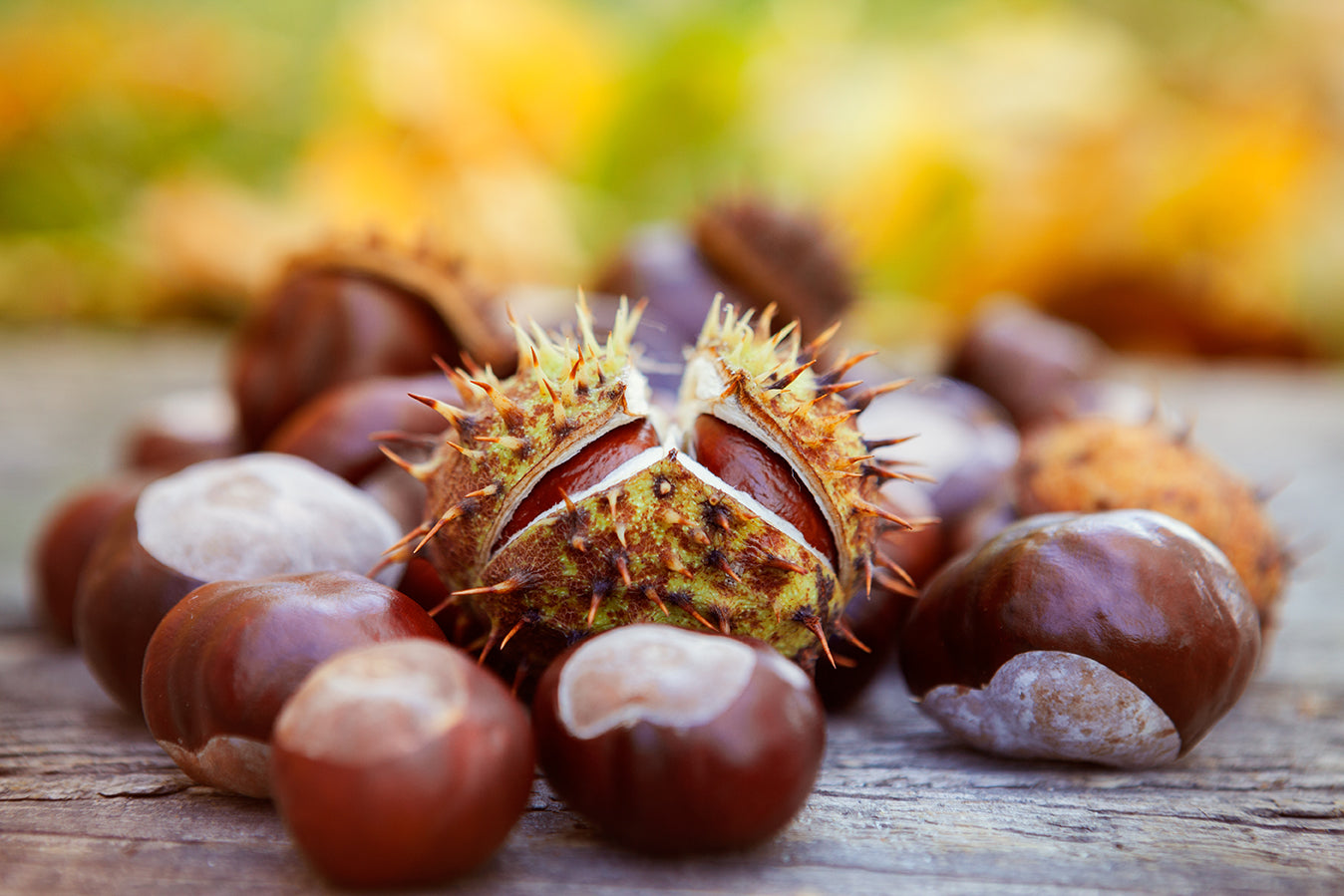
Family Hippocastanaceae. These trees grow up to 100 feet tall, have green leaves, white flowers and large fruit, known as the horse chestnut - that contain 1-3 seeds/nuts (conkers) that are light green on the inside and have spiky growths on the outside. Geography: Native to the Balkens and are now naturalized throughout Europe, Western Asia and the US and India.
Historical Uses
Often used to treat bruises and to provide symptom relief from varicose veins ((Fachinfo Reparil (R)- Sportgel 1994; Fachino Opijo (R) N gel, 1991; Calabrese & Preston 1993), As well as painful hemorrhoids (Reynolds, 1977). Used for its astringent, antioxidant, anti-exudative (vascular tightening) and anti-venous (help in symptoms of vein insufficiencies) benefits
Stories & Legends
Folklore states that in 1576, the Turkish Ambassador gave Charles de I’Ecluse, the Ambassador of Vienna (during his visit to Constantonople), a Horse Chestnut that was ready to bud. As a result of that gift, Horse Chestnuts spread through Europe over the next 200 years. In rural areas of Europe, people often carried 1-2 conkers in their pocket to protect them from rheumatism and lower back pain. The conkers also came to symbolize money. Conkers were hung in closets to protect wool clothes from mites.